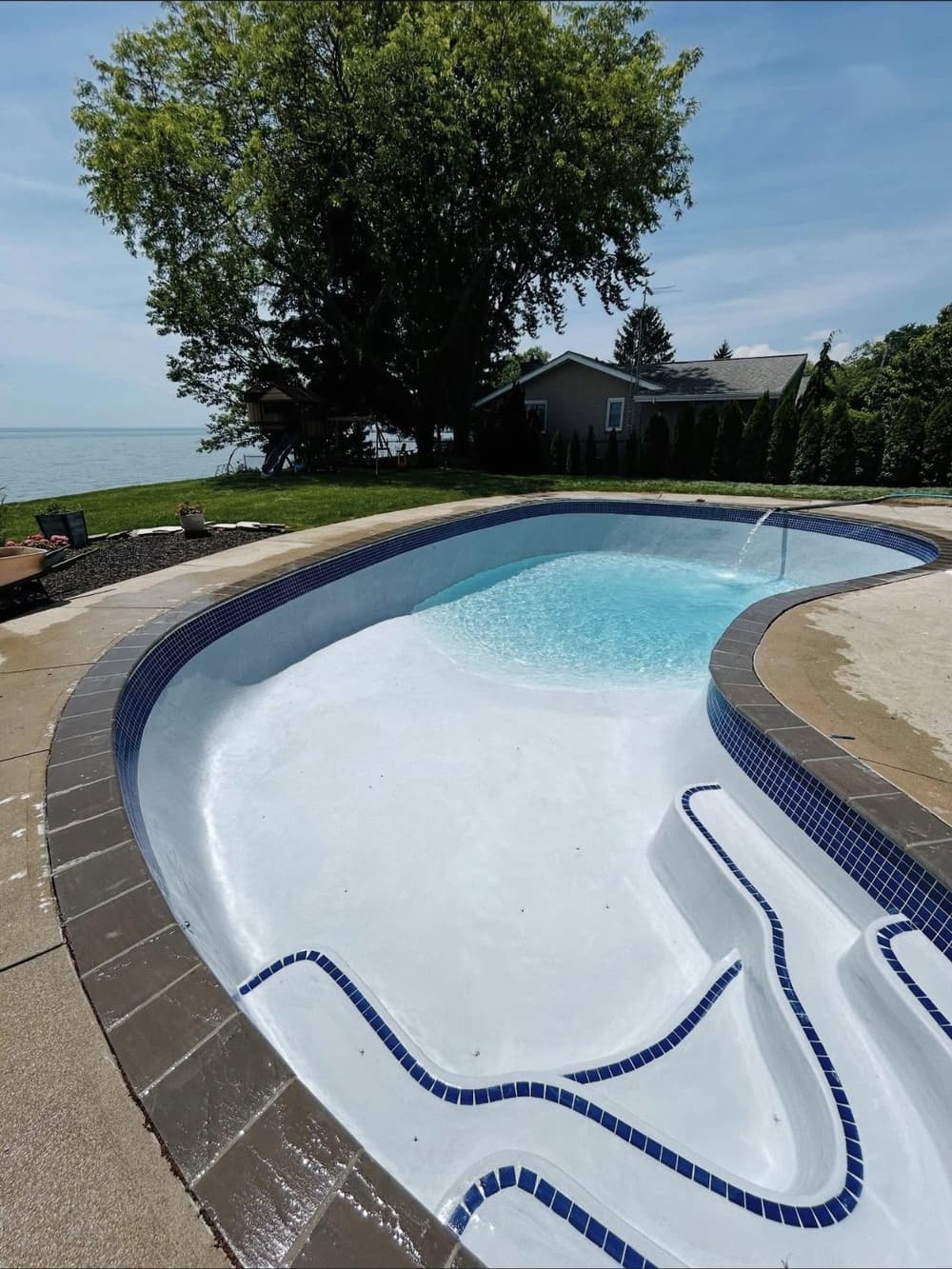
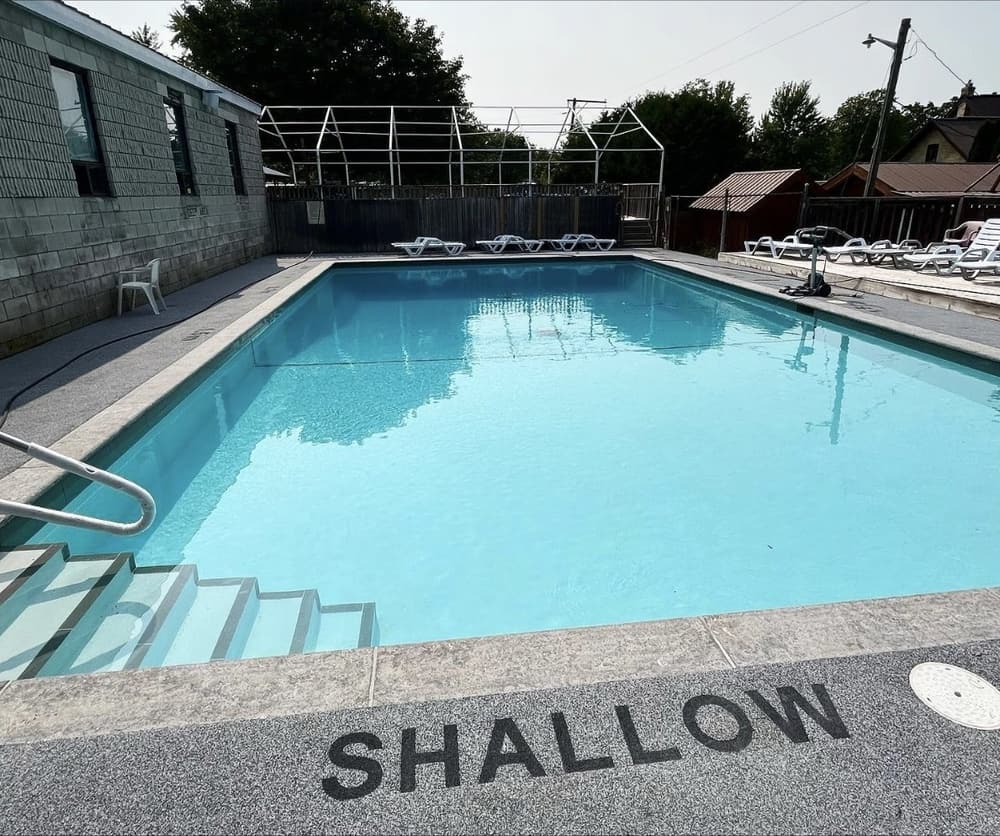
It seems like the obvious first step before resurfacing: drain the pool and save the contractor some time. With an in-ground concrete pool, that can be an expensive mistake.
The problem is groundwater
A full pool is held down by the weight of its water. Once it's empty, the only thing pushing on the shell is the ground around it. If the soil is wet, groundwater pushes up and in on the empty shell. This is called hydrostatic pressure.
In the worst case, an empty pool can crack, shift or even lift out of the ground. Less dramatic damage, like cracks in the floor or walls, can still turn a resurfacing job into a structural repair.
When the risk is highest
- In spring and after heavy rain, when the ground is saturated
- On clay soils that hold water, common across Essex County, Chatham-Kent and the Niagara peninsula
- Near lakes and rivers, where the water table is often high, like along Lake Huron, Lake Erie and the St. Clair River
What about the relief valve?
Many concrete pools have a hydrostatic relief valve in the floor that lets groundwater in to relieve pressure. It helps, but valves on older pools can be clogged or seized, so it isn't something to rely on without checking.
Where the water goes matters too
Many Ontario municipalities have rules about draining pool water. Chlorinated water often can't go into the storm sewer or onto the street, and some cities want it sent to the sanitary sewer instead. Check with your municipality before any water comes out.
How draining is handled
When you have your pool resurfaced, draining is part of the job. The water table and the weather are checked first, the discharge is planned around local rules, and the work is scheduled so the pool isn't left empty any longer than it needs to be.
Lowering the water a bit for winter closing is different and fine. It's fully emptying the pool that needs a plan.